USA authorized retailer 1 capsule a day · 30 per bottle 60-day money-back guarantee No caffeine amount printed
SodaSlimSodaslimnow · authorized retailer Buy now

Mechanism

How Does SodaSlim Work? The Mechanism Step by Step

SodaSlim is one morning capsule whose five ingredients are meant to support metabolism, appetite and energy from fat.

Each named ingredient is covered in NIH's weight-loss fact sheet, so you can read what is known about every one.

To see each one, look at the five ingredients.

By the SodaSlim Editorial Desk · Last updated September 24, 2026

The mechanism

Five steps, and the fifth is where it stops being checkable

Each step is what the product is claimed to do, beside what our sources say about the ingredient doing it.

A SodaSlim listing panel from the seller describing how the product is meant to work
The seller's own how-it-works panel. It describes an idea and carries no figure.
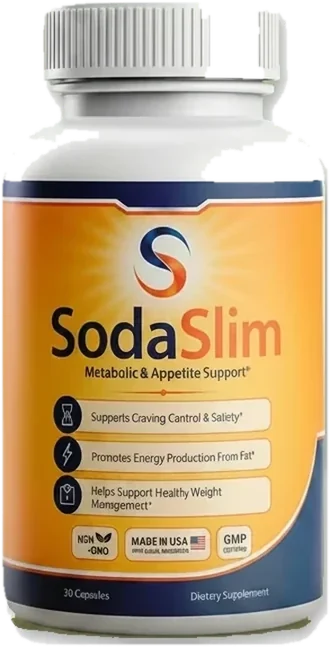
A rendering of the SodaSlim bottle in orange and navy with a white cap, showing the wordmark, a support line, three claim pills, a row of three marks and a navy foot band
The supplied bottle rendering. Four support lines and three claim pills, and no amount anywhere on it.
The SodaSlim ingredients listing panel naming the five ingredients
The seller's ingredients panel names all five and prints no amount for any of them.
A second SodaSlim listing panel from the seller repeating the support lines
A second panel from the same listing, repeating the support lines with no figure attached.
A rendering of the SodaSlim bottle in orange and navy with a white cap, showing the wordmark, a support line, three claim pills, a row of three marks and a navy foot band
The same rendering, read the other way round: no panel, no amounts and no caffeine figure, which is where the chain breaks.

The claim is a claim about a process

The four support lines say the product supports metabolism and appetite, supports craving control and satiety, promotes energy production from fat and helps support healthy weight management. Read them carefully and none of them names a condition, a quantity or a length of time.

That is what a structure or function claim is, and FDA puts the burden on the firm: “If a manufacturer or distributor makes a structure/function claim ... the firm must have substantiation that the claim is truthful and not misleading.” The substantiation sits with a manufacturer this artwork does not name.

Step one: caffeine, the ingredient with numbers attached

Caffeine anhydrous is dried, concentrated caffeine, and it is the only name on this label that both regulators quantify. NIH is careful about the size of the effect: “Weight-loss dietary supplements with caffeine might help you lose a little weight or gain less weight over time.”

FDA is careful about the ceiling: “400 milligrams a day - that's about two to three 12-fluid-ounce cups of coffee - as an amount not generally associated with negative effects”. And at the other end: “The FDA estimates toxic effects, like seizures, can be observed with rapid consumption of around 1,200 milligrams of caffeine”. It also warns that “Pure and highly concentrated caffeine products can have serious health consequences, including death.”

Every one of those numbers is useful, and none can be used here, because the label prints no caffeine figure at all.

Step two: two more extracts, and both carry caffeine too

Green coffee bean extract is an extract of unroasted coffee beans. NIH: “Green coffee bean extract might help you lose a small amount of weight.” And on safety: “Green coffee bean extract seems to be safe (at up to 200 mg a day for 12 weeks).” Green tea extract is a concentrated extract of green tea leaf. NIH: “Green tea might help you lose a small amount of weight.”

NCCIH describes the mechanism no more strongly than that: “The catechins and caffeine in green tea and its extracts may have a modest effect on body weight.” It also records the plain fact that “No safety concerns have been reported for green tea consumed as a beverage by adults. However, green tea does contain caffeine.”

So three of the five bring caffeine into the capsule, and the total is the number a reader would most want. It is not published.

Step three: appetite, the rind and the raspberry compound

Garcinia extract is fruit rind containing hydroxycitric acid. NCCIH describes it plainly: “The fruit rind contains a chemical called hydroxycitric acid (HCA), which has been studied for its effect on appetite.” That is the appetite half of the support lines, and where our sources part company. NIH: “Garcinia cambogia has little to no effect on weight loss.” NCCIH: “It's unclear whether garcinia cambogia products help with weight loss. Some evidence suggests a modest effect, while other evidence shows no effect.”

Raspberry ketone is the shortest entry in the fact sheet. On whether it works: “Its effects on body weight are unknown.” On whether it is safe: “Raspberry ketone hasn't been studied enough to tell if it's safe.” That is not a weak finding. It is the absence of one in both directions.

Step four: where the story stops being checkable

Up to here every step can be followed, because every ingredient has been written about. This is where it stops. A published finding attaches to an amount: NIH's green coffee line carries 200 milligrams a day for 12 weeks inside it, and FDA's caffeine figures are milligrams per day. To carry either across you need the capsule's own figure.

Three of the five named ingredients contain caffeine - caffeine anhydrous, green coffee bean extract and green tea extract - and no caffeine figure is printed for any of them, or for the serving as a whole. There is no Supplement Facts panel, no amount for any of the five names, no blend total and no course length. No published trial on the finished SodaSlim formula appears in anything we have read, so every source on this site describes a named ingredient or the product category rather than this product.

And the fact sheet's summary of the category sits over all of it: “there's little scientific evidence that weight-loss supplements work.”

Step 1 of 5

Source by source

Five pages, opened and read on September 24, 2026

The fact sheet that covers all five names

NIH names caffeine, green coffee bean extract, raspberry ketone, garcinia cambogia and green tea, gives each a verdict on whether it works and one on whether it is safe, and summarises the shelf as a whole: “there's little scientific evidence that weight-loss supplements work.”

The page that holds the milligram figures

FDA cites “400 milligrams a day - that's about two to three 12-fluid-ounce cups of coffee - as an amount not generally associated with negative effects”. At the other end: “The FDA estimates toxic effects, like seizures, can be observed with rapid consumption of around 1,200 milligrams of caffeine”. It also warns that “Pure and highly concentrated caffeine products can have serious health consequences, including death.”

Modest on weight, specific on capsules

NCCIH describes the weight effect as modest: “The catechins and caffeine in green tea and its extracts may have a modest effect on body weight.” On safety it records the point that matters most for an extract in a capsule: “Although uncommon, liver injury has been reported in some people who used green tea products, primarily green tea extracts in tablet or capsule form.”

The page that does not agree with the fact sheet

NCCIH says “It's unclear whether garcinia cambogia products help with weight loss. Some evidence suggests a modest effect, while other evidence shows no effect.” It also records that “Several cases of liver damage have been reported. Some of these cases were severe, but this appears to be uncommon.”

The page behind the asterisk

FDA on what the agency does before a supplement is sold: “Under DSHEA, FDA does not have the authority to approve dietary supplements before they are marketed.” It is also the source of the substantiation line quoted in step one.

Where it stops

The gap is not the evidence. The gap is the amount

It is worth being clear about which kind of problem this is. This one is not the kind where nobody has studied the ingredients: all five names are in the fact sheet.

It has the other problem. The evidence exists, the effects described are small, and the label publishes nothing that joins the two. Three of the five named ingredients contain caffeine - caffeine anhydrous, green coffee bean extract and green tea extract - and no caffeine figure is printed for any of them, or for the serving as a whole.

That is not a reason to say the product does nothing. It is a reason to say that what it does cannot be checked from outside.

The three things a reader would need

  • The amount of each named ingredient in one capsule. Not published.
  • The total caffeine in one serving, from all three sources of it. Not published.
  • A course length, to sit beside NIH's 12 weeks for green coffee. Not published.

What a support claim is

And what the asterisk at the end means

A process, not a condition

Supports and promotes are claims about a body process. A claim about a disease would make this a drug, which is why no line here names one.

No amount, no timeframe

None of the four lines carries a quantity or a length of time, so nothing in them can be measured.

Substantiation sits with the maker

FDA says the firm must have substantiation that the claim is truthful and not misleading. No manufacturer is named on the artwork.

And the asterisk

These statements have not been evaluated by the Food and Drug Administration. This product is not intended to diagnose, treat, cure, or prevent any disease.

The mechanism is describable. The dose is not

Every ingredient here has been written about and the published effects are small. What is missing is the amount. Three bottles is $59 each with free US shipping and 60 days to change your mind.

See the packs and the guarantee

Order desk +1 (302) 200-3480 · opening hours not published

Questions

SodaSlim: common questions

How is SodaSlim supposed to work?
The four support lines describe metabolism and appetite support, craving control and satiety, energy production from fat and healthy weight management. Those are structure and function claims. Behind them sit five named ingredients, three of which contain caffeine, with no amount published for any of them.
Does NIH say any of this works?
It says something smaller than that. Weight-loss dietary supplements with caffeine might help you lose a little weight or gain less weight over time. Green coffee bean extract and green tea might help you lose a small amount of weight. Raspberry ketone's effects on body weight are unknown, and garcinia cambogia has little to no effect on weight loss. The same fact sheet says there is little scientific evidence that weight-loss supplements work.
Why does the missing amount matter so much?
Because published findings come attached to amounts. NIH's green coffee line carries 200 milligrams a day for 12 weeks inside it, and FDA's caffeine figures are milligrams per day. With no figure on the bottle there is nothing to hold either against.
Does SodaSlim burn fat?
This site does not say so. One of the four support lines is that the product promotes energy production from fat, which is a claim about a process rather than a promise of a result, and none of the sources we opened reports a fat-burning result for this formula.
Is there a study on SodaSlim itself?
None that we have found. Every source cited here describes a named ingredient or the product category, and none of them tested this finished capsule.

References

  1. National Institutes of Health, Office of Dietary Supplements. Dietary Supplements for Weight Loss: Fact Sheet for Consumers. https://ods.od.nih.gov/factsheets/WeightLoss-Consumer/
  2. U.S. Food and Drug Administration. Spilling the Beans: How Much Caffeine is Too Much? https://www.fda.gov/consumers/consumer-updates/spilling-beans-how-much-caffeine-too-much
  3. National Center for Complementary and Integrative Health. Green Tea. https://www.nccih.nih.gov/health/green-tea
  4. National Center for Complementary and Integrative Health. Garcinia Cambogia. https://www.nccih.nih.gov/health/garcinia-cambogia
  5. U.S. Food and Drug Administration. Questions and Answers on Dietary Supplements. https://www.fda.gov/food/information-consumers-using-dietary-supplements/questions-and-answers-dietary-supplements

Every source above was opened and read on September 24, 2026. None of them tested SodaSlim itself. They describe the named ingredients and the product category, which is a different thing from testing this finished formula.

SodaSlim, from $49 a bottle 60-day money-back guarantee · 30 capsules a bottle Check price