SodaSlim Blog
Does SodaSlim Work? What “Might Help You Lose a Small Amount of Weight” Actually Means
Does SodaSlim work? Nobody can say for this capsule, and the sources explain why. All five named ingredients appear in NIH’s weight-loss fact sheet, and the best verdict any of them gets is that it might help you lose a small amount of weight. One has effects that are unknown, on one our two sources disagree, and SodaSlim publishes no amount for anything.
By the SodaSlim Editorial Desk · Last updated October 23, 2026
The sentence three of these five ingredients earn
Read enough of this shelf and one phrase starts to repeat. It is not a promise and it is not a denial, and most copy quietly rounds it up on the way past. NIH writes it about green coffee bean extract like this: “Green coffee bean extract might help you lose a small amount of weight.” About green tea: “Green tea might help you lose a small amount of weight.” And about caffeine, a near neighbour: “Weight-loss dietary supplements with caffeine might help you lose a little weight or gain less weight over time.”
Three of the five ingredients on this label earn that sentence. Two do not reach it, and the sentence is doing more hedging than a fast reading notices.
- The sentence three of these five ingredients earn
- Three hedges in one short clause
- All five, and where each of them lands
- Why this is a ceiling and not a starting point
- A verdict is not a dose, and this label has neither
Three hedges in one short clause
Take the clause apart. Might. Not does, not will, not has been shown to. Might reports that a possibility survives the evidence, not that a result is expected.
Help you lose. Not causes you to lose. Help is a contributory verb, and it does not describe something that works on its own.
A small amount. Small is the size word, and it is the only quantitative thing in the clause. NIH attaches no figure to it here, so nobody reading it can convert small into pounds, and this site will not do that conversion either.
Three hedges in seven words. A page that quotes this sentence and then writes about results has not quoted it, it has replaced it.

All five, and where each of them lands
What is worth saying about this label is that the sentence can be looked up for every ingredient on it. All five are covered by name in one NIH fact sheet. So the question here is not whether evidence exists. It is how big that evidence says the effect is, and where each ingredient lands.
On whether it works, and on whether it is safe
NIH: “Weight-loss dietary supplements with caffeine might help you lose a little weight or gain less weight over time.”
NIH on safety: “Caffeine is safe for most adults at doses up to 400-500 milligrams (mg) a day, but it can make you feel nervous, jittery, and shaky.”
Amount printed on this label: not published.
The entry that carries two numbers
NIH: “Green coffee bean extract might help you lose a small amount of weight.”
NIH on safety: “Green coffee bean extract seems to be safe (at up to 200 mg a day for 12 weeks).” Both halves carry a figure, and this label publishes neither an amount nor a course length to hold them against.
Amount printed: not published.
The one that does not reach a verdict at all
NIH: “Its effects on body weight are unknown.”
NIH on safety: “Raspberry ketone hasn't been studied enough to tell if it's safe.” Neither is a weak finding. Both are the absence of one.
Amount printed: not published.
The one where our two sources do not line up
NIH: “Garcinia cambogia has little to no effect on weight loss.”
NCCIH: “It's unclear whether garcinia cambogia products help with weight loss. Some evidence suggests a modest effect, while other evidence shows no effect.”
Amount printed: not published.
A small amount, with a format-specific caution
NIH: “Green tea might help you lose a small amount of weight.”
Amount printed: not published.
Three reach the small-amount sentence. One has effects on body weight that are unknown. On one, the two federal pages do not line up. Nothing here reaches anything stronger.
Why this is a ceiling and not a starting point
That is why we call it a ceiling rather than a floor. A floor is a starting point you build on. A ceiling is the best available reading of what is published, with nothing above it.
| Ingredient | The verdict in the sources we opened | Amount printed |
|---|---|---|
| Caffeine Anhydrous | Might help you lose a little weight or gain less weight over time | Not published |
| Green Coffee Bean Extract | Might help you lose a small amount of weight | Not published |
| Raspberry Ketone | Effects on body weight are unknown | Not published |
| Garcinia Extract | Little to no effect on weight loss, or unclear, depending on the page | Not published |
| Green Tea Extract | Might help you lose a small amount of weight | Not published |
Nothing in that table says the capsule does nothing. It says that the strongest thing our sources publish about any single ingredient in it is a hedged possibility of a small amount. No published trial on the finished SodaSlim formula appears in anything we have read, so every source on this site describes a named ingredient or the product category rather than this product.
The table is built ingredient by ingredient, and we are not adding the rows up.
What this post will not do
Convert a small amount into pounds, kilograms or a percentage. NIH does not attach a figure to that phrase in the sentences we quote, and any number written here would be one we invented. An invented figure reads exactly like a real one.
A verdict is not a dose, and this label has neither
Here is where the ceiling meets the gap. Every one of those verdicts is about a substance at an amount. NIH's green coffee entry says so out loud: “Green coffee bean extract seems to be safe (at up to 200 mg a day for 12 weeks).” A figure and a course length, inside the safety clause.
No amount is published for any of the five. There is no Supplement Facts panel for this product, so there is no milligram figure, no percent daily value and no blend total anywhere on it.
So the verdict and the label cannot be joined. The ceiling is published. The thing you would measure against it is not published. That is the difference between a claim you can check and a claim you can only accept, and the label page shows the amount column empty on all five rows.
The sentence NIH puts above the whole shelf
There is one more sentence, and it sits above all five of the others. The same NIH fact sheet opens on the category as a whole: “there's little scientific evidence that weight-loss supplements work.”
That is not a sentence about this product. It is a sentence about the shelf this product stands on, and it is the context in which every small-amount verdict below it should be read.
The same fact sheet carries a second category statement worth printing here. NIH's fact sheet on dietary supplements for weight loss carries a warning about the category this product sits in: weight-loss products marketed as dietary supplements are sometimes adulterated with prescription drugs or controlled substances. That is a sentence about a class of products. Nothing we have read says SodaSlim has been tested for adulterants, nothing says it has been found to contain any, and nothing on this site suggests either.
FDA adds the regulatory frame: “Under DSHEA, FDA does not have the authority to approve dietary supplements before they are marketed.” A supplement that is not FDA approved is the ordinary state of every product in the aisle, and it is one reason the label is the document worth reading.
What a ceiling like that means for what you can expect
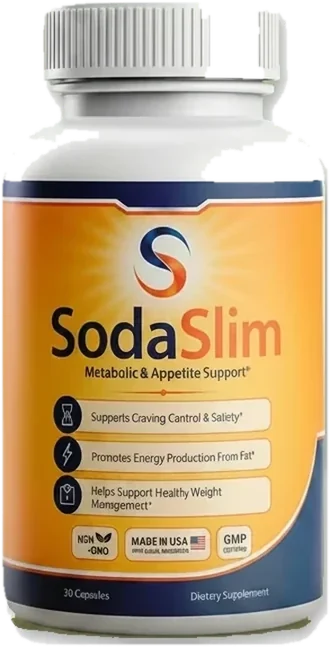
Put the ceiling next to what the bottle is sold as. The four support lines supplied with this stock read: “Metabolic & Appetite Support*” “Supports Craving Control & Satiety*” “Promotes Energy Production From Fat*” “Helps Support Healthy Weight Management*” None of them names a number, a timeline or a disease, and every one carries an asterisk. The four support lines takes them apart one at a time.
Those are structure and function claims. FDA: “If a manufacturer or distributor makes a structure/function claim ... the firm must have substantiation that the claim is truthful and not misleading.” That substantiation is held by the firm, and this site has not seen it.
So the honest version is short. A published ceiling of a small amount, for three of five ingredients, at amounts nobody can check, in a formula nobody has published a trial on. No verified review data was supplied for this product, so no post here quotes a customer, prints a score or reports an order count. The reviews page explains that in full.
Deciding with the ceiling in plain view
None of this is an accusation. A small-amount verdict is a real verdict, and three of the five ingredients here reach it. The problem is not that the ceiling is low. It is that the label gives you no way to stand under it.
If you buy, follow what the label says: The recommended dosage is 1 capsule daily. For the best results in appetite control and energy levels, we suggest taking it in the morning. For healthy adults 18 years and over only. Not for anyone under 18. Talk to a doctor before use if you take medicine. Do not take more than the label says unless a clinician tells you to.
Every quotation in this post is printed in full above, and every source is linked below.
These statements have not been evaluated by the Food and Drug Administration. This product is not intended to diagnose, treat, cure, or prevent any disease.
Try SodaSlim with 60 days to change your mind
Three bottles is $59 each with free US shipping, and 90 days of product sits against a 60-day window. Two bottles is $69 each if you would rather start smaller.
Order desk +1 (302) 200-3480 · opening hours not published
References
- National Institutes of Health, Office of Dietary Supplements. Dietary Supplements for Weight Loss: Fact Sheet for Consumers. https://ods.od.nih.gov/factsheets/WeightLoss-Consumer/
- U.S. Food and Drug Administration. Spilling the Beans: How Much Caffeine is Too Much? https://www.fda.gov/consumers/consumer-updates/spilling-beans-how-much-caffeine-too-much
- U.S. Food and Drug Administration. Questions and Answers on Dietary Supplements. https://www.fda.gov/food/information-consumers-using-dietary-supplements/questions-and-answers-dietary-supplements
Every source above was opened and read on September 24, 2026. None of them tested SodaSlim itself. They describe the named ingredients and the product category, which is a different thing from testing this finished formula.
Keep reading
Next on this site
Three of five ingredients contain caffeine, and the label prints no total
Caffeine anhydrous, green coffee and green tea all carry caffeine, FDA and NIH both publish daily figures, and this bottle prints none of them.
Raspberry ketone: what it means when both the effect and the safety are unknown
Its effects on body weight are unknown and it has not been studied enough to tell if it is safe. Two sentences, two different kinds of silence.
All five ingredients, one at a time
Each named ingredient with the source for it, the evidence category it lands in, and no amount for any of them.